Category: Future Cars
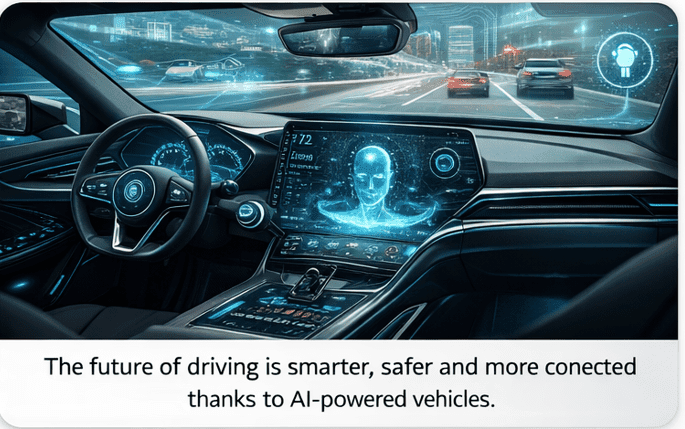
In the next decade, our cars are changing faster than almost any other technology in our daily lives. What was once a simple machine for getting from point A to point B is now transforming into a smart, connected, and highly intuitive platform — almost like a personal assistant on wheels.
While early vehicles focused mainly on mechanical engineering and raw power, today’s cars are about data, artificial intelligence, and continuous learning. This evolution isn’t just about convenience — it’s fundamentally reshaping how we travel, how we stay safe, and how our vehicles interact with the world around them.
Cars Are Becoming Intelligent Machines
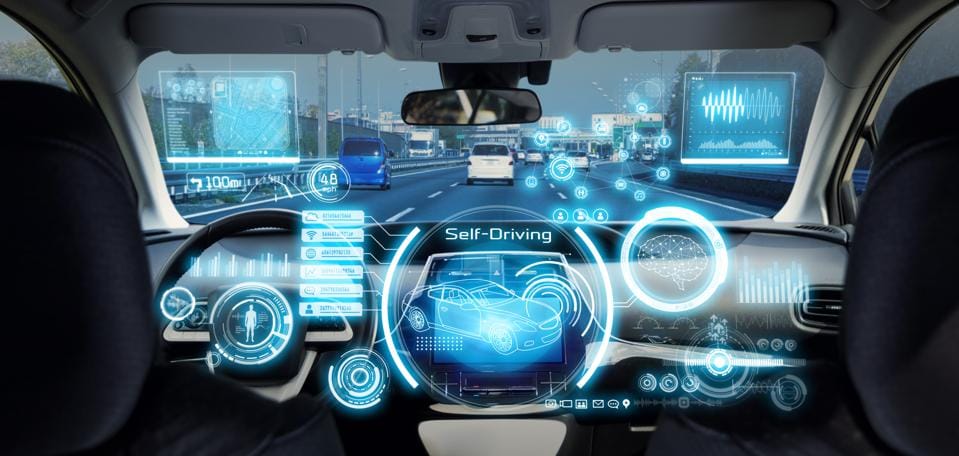
Traditionally, driving meant relying entirely on human skill: steering, braking, watching mirrors. Modern vehicles, however, now come equipped with powerful onboard computers and AI algorithms that assist or augment the driver in real time.
Advanced sensors, cameras, and radar systems scan the environment hundreds of times per second. AI uses this data to recognize traffic lights, other vehicles, and even pedestrians — often reacting faster than a human could. This means cars can make decisions, such as applying brakes or steering corrections, without direct input from a driver.
How AI Enhances Safety and Driving Assistance
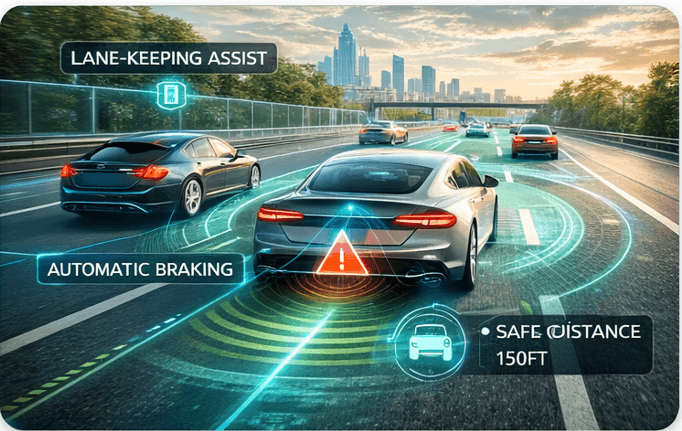
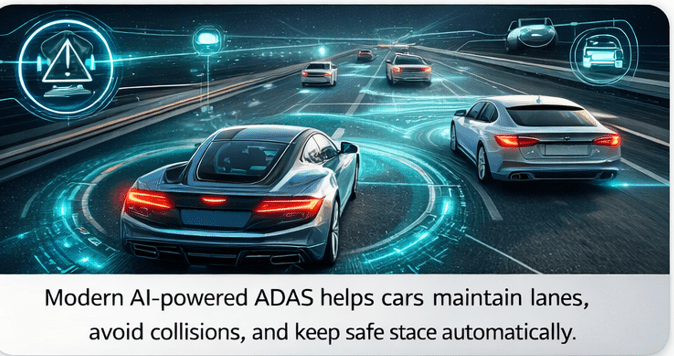
One of the biggest impacts of AI in vehicles is Advanced Driver Assistance Systems (ADAS). These systems are no longer luxury options — they’re rapidly becoming standard equipment across new cars.
AI‑powered ADAS includes:
- Adaptive Cruise Control: Automatically adjusts speed to maintain a safe following distance.
- Lane‑Centering and Lane‑Keeping Assist: Helps keep vehicles centered in the lane, easing driver workload.
- Automatic Emergency Braking (AEB): Detects potential collisions and applies brakes — sometimes faster than human reaction time.
- Self‑Parking and Collision Avoidance: Uses sensors and AI to maneuver the vehicle into a parking space or avoid obstacles.
All of this contributes to significant reductions in crash risk, particularly in urban driving conditions where human error is a leading cause of accidents.
Cars That Talk, Learn, and Personalize
Modern vehicles no longer rely solely on touchscreens and buttons. AI is enabling voice‑driven assistance that understands natural speech and context, similar to smart home assistants. Drivers can ask a car to navigate to a location, find a nearby restaurant, or adjust cabin settings — all without taking their hands off the wheel.
AI also adapts over time:
- Learns your driving preferences
- Customizes route suggestions based on your habits
- Adjusts climate and comfort settings automatically
This level of personalization transforms the car from a tool into an intelligent companion on the road.
Autonomous Driving: Not Tomorrow — But Soon
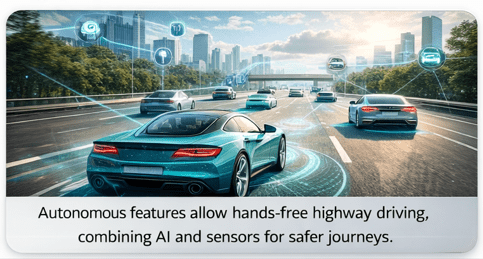
Many vehicle manufacturers and tech companies are racing toward higher levels of autonomous driving, where human input becomes optional under certain conditions. While full self‑driving (Level 5 autonomy) — where no human intervention is needed at all — is still in development, hands‑free highway driving and advanced automation are already being tested.
Global partnerships between automakers and AI tech firms are speeding innovation and may make advanced autonomous features more affordable and deployable at scale.
Beyond Driving: Cars Communicating With the World
Future smart cars won’t just interact with their occupants — they’ll interact with the larger transportation ecosystem. Through technologies like 5G, Vehicle‑to‑Everything (V2X), and edge computing, cars will exchange information with each other, traffic infrastructure, and even pedestrians’ devices.
This connectivity could enable:
- Real‑time traffic flow optimization
- Faster emergency response coordination
- Predictive accident prevention
- Efficient route planning based on city‑wide data
In essence, cars will be part of a collaborative mobility system — a huge leap past isolated vehicles into an interconnected transportation network.
What This Means for Drivers
Despite all the technology, the future of driving is not about removing humans entirely — at least not yet. Instead, it’s about supporting drivers, enhancing safety, and reducing the cognitive load of driving.
Here’s what the smart‑car era promises for everyday drivers:
- Safer Roads: AI systems anticipate hazards and reduce distracted‑driving risk.
- More Comfort: Personalized settings and adaptive interfaces enhance the in‑car experience.
- Reduced Stress: Hands‑free and assisted driving on highways can turn long trips into more relaxed journeys.
- Smarter Navigation: Cars suggest routes and adapt to conditions in real time using predictive analytics and connectivity.
The Road Ahead
As artificial intelligence, connectivity, and autonomy continue to evolve, the future of driving looks smarter, safer, and more adaptive than ever. Cars are not just transportation machines — they are becoming intelligent partners that enhance how we interact with our environment and how we reach our destinations.
In the coming years, driving won’t just be about horsepower and speed — it will be about data, intelligence, and seamless integration with the world around us.