Category: Car Technology
Today, sensors are acting as the guardians of automobiles, keeping a silent watch around the vehicle, utilizing cameras, radars, as well as ultrasonic sensors.
These systems will aid at braking situations, lane keeping, parking, and blind spot monitoring. These systems have a quicker response to situations compared to a driver’s reaction, which helps to avoid accidents even before they occur.
Consequently, as technology improves, sensors become better, and the automobile remains safe, yet the driver remains in command.
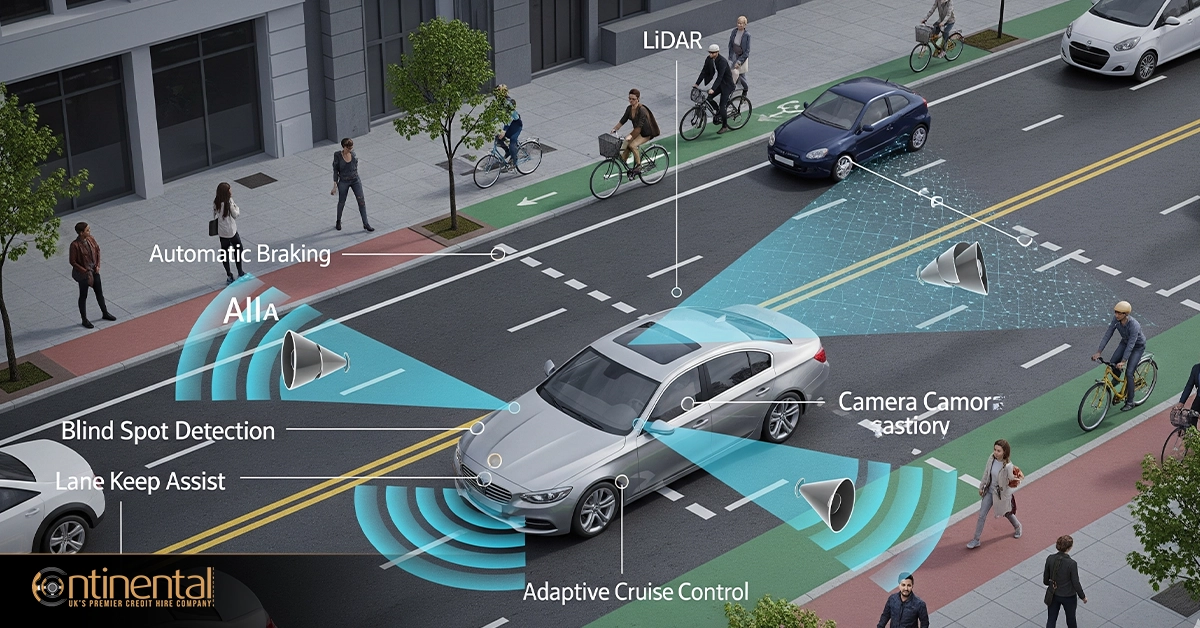
Modern vehicles make use of a cluster of cameras, radars, and LiDAR devices to constantly survey their environment in real-time, thus providing the necessary safety mechanisms that avoid road accidents from happening in the first place.
Key Safety Technologies Enabled by Sensors
- Collision Avoidance Systems (AEB): Detection of objects or pedestrians by radars or cameras, followed by the execution of braking procedures to avoid a collision altogether or minimize its impact.
- Blind Spot Detection – Here, rear/side sensors detect vehicles entering the blind spots, alerting the driver through visual/haptic feedback.
- Adaptive Cruise Control (ACC): This uses radar or sensor technology to keep a safe distance from the preceding vehicle.
- Lane Keeping Assist (LKA), in which cameras recognize the lane markings and will steer the car back on track and/or warn the driver if the car strays from its lane.
- Electronic Stability Control System: Wheel speed and steering angle sensors monitor skidding and lock individual wheels to regain control.
How Sensors Enhance Vehicle Safe
Modern vehicles rely on advanced sensors that function like a car’s awareness system. These technologies constantly observe the surroundings, track nearby vehicles, and analyze driving conditions to support safer decision-making on the road.
Different types of sensors work together to improve safety:
- Radar sensors allow vehicles to detect objects at long distances, even in poor weather such as rain or fog. This helps drivers stay alert to potential hazards ahead and reduces the risk of sudden collisions.
- Ultrasonic sensors are mainly used at low speeds, assisting with parking and maneuvering in tight spaces by detecting nearby obstacles.
- Cameras play a crucial role by identifying road signs, pedestrians, and lane markings. These systems help maintain proper lane position and provide smoother, more controlled driving.
- LiDAR technology creates a detailed three-dimensional view around the vehicle. By mapping the environment in real time, the car gains a precise understanding of where objects are located, improving overall awareness.
Real-World Benefits: Making Roads Safer
Research indicates that vehicles equipped with advanced driver-assistance systems are involved in fewer accidents compared to those without such technology. Safety studies suggest that modern automotive systems can significantly reduce collision rates.
The benefits are clear:
- Fewer accidents result in fewer injuries and fatalities.
- Reduced collisions help lower repair and insurance costs.
- Vulnerable road users, including cyclists and pedestrians, gain added protection.
The Future of AI-Driven Safety
Vehicle safety technology continues to evolve. In the coming years, cars are expected to become even smarter through innovations such as:
- Automatic emergency response, enabling vehicles to contact emergency services immediately after a serious accident.
- Vehicle-to-Everything (V2X) communication, allowing cars to exchange information with traffic signals, other vehicles, and nearby devices.
- Adaptive learning systems, where AI improves its performance over time based on driving experience.